Showing posts with label Book Review/Summary. Show all posts
Thursday, April 22, 2021
The Heart of Darkness by Joseph Conrad
When I first read this book I recalled a different story. One about journeying through a dark primitive landscape; two worlds fighting against each other, and an insane deserter. I must have missed Conrad's weight after being so heavily bogged down by his language. This was a very sobering read and for the denseness of the prose, it was not an easy one. Conrad seems to have a knack for describing landscapes and phenomena emotively. That might be why many have problems with this novel, many of his descriptions are so personal they are occasionally bizarre. "We live as we dream, alone", that quote probably best defines his approach.
Thursday, March 18, 2021
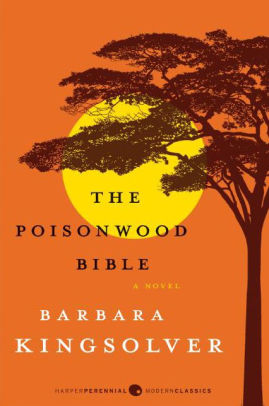
The Poisonwood Bible Review
I recently read Barbara Kingsolver's The Poisonwood Bible. I had wanted to read this book since I was in 6th grade. The plot concerns a Baptist missionary family posted in a rural Congolese village. As you can expect stuff does not go to plan, cultures clash and tragedy strikes. Short chapters are narrated in first person by the wife and the three daughters of this fervent preacher, with the daughters providing most of the narration. I enjoyed this narration style, and it allowed for unique perspectives as well as a story that seems to reinforce and converge together. I also enjoyed Barbara's prose and found it very colourful sometime maybe to dreamy, but there are some very nice moments. Likewise, I enjoyed reading as the children grew and changed and all the difficulties they had. Likewise, I enjoyed most of the secondary characters as well and felt that most of the prominent ones were as well fleshed out as they needed to be. The problem with the novel though is the ending. Dear Lord, the novel climaxes about 2/3 before the novel ends and the last third of the novel is in this perpetual meditative state. I understand that their needs to be a long wrap up to the climax (which was excellent, exhilarating and very tragic) but out of the 130 pages at least half were banal political lectures or a detailed but largely unnecessary outline of the lives of these protagonists. The last third feels like a completely different novel with characters diverging and lamenting about their own struggles individually. I was expecting a novel much like the first two thirds.
PEELS NO LIVE EVIL ON SLEEP
Thursday, February 6, 2020
The Death of Ivan Ilyich Review
The Death of Ivan Ilyich Leo Tolstoy
Sad and daunting at times, but relieving and sincere as well. A case study in life.
Siddhartha Review
Siddhartha Herman Hesse
Appears simple and is told quite simply and quickly, however, the story becomes very profound, hopeful, sad and insightful.
As a self-help journey book, it is superior to the Alchemist in every way. The story is paced better, the wisdom is not given out like candy but rather develop with their characters, through failures, and insights and the characters and ethos of the book remain memorable.
Wednesday, January 1, 2020
On the Genealogy of Morals Review/Summary
On the Genealogy of Morals Friedrich Nietzsche
First Nietzsche read. Was profound but not for everyone, largely romantic and contrary to the logical analytical thought of later years. Very literary and historical, largely a philosophy of belief rather than truth, still very interesting.
Essay 1: "Good and Evil", "Good and Bad"
A slave revolt has resulted in the ressentiment of value judgements of what "good" is. The poor, aided by Judeo-Christian values have found a cunning way to wage century-long warfare against the nobles, strong, warriors. The philology shows that "good" actually means "proper" and "strong" not "nice" but this was changed in a slave revolt as stated above to Evil. Bad was originally and still is just "not proper" the opposite of good. Being powerful and strong and individualistic was seen as a sin and EVIL and GOOD was now the humble and meek, traits supposedly found among the slaves (slaves does not mean slaves it just means those subjugated).
According to slaves, masters lack the authority and right to possess the traits of individualism because these traits are evil, look at the seven deadly sins. Much like Hegel notes the goal of the slave is actually not to become the master, but to smother him and surreptitiously value guilt him to his level. He wants the extinction of the "blond beast". The powerful are dammed by religion and the rich and powerful are looked as evil. These value judgements automatically damn humans for their imperfections and seeking of power when they should not.
The man of ressentiment becomes more clever yet needs to lie to himself to keep up the facade. They seek to constrain others power as they are too weak or culturally poisoned to take off their shackles. This man can also be lead to a subtle form of nihilism, through a belief that nothing matters in this world. This man sadly believes himself to be the good man because of the prevalence of these values. But this man is actually weakened from these values and they interpret weakness as freedom and equate that as merit.
Though the slave morality runs rampant in society that does not mean it is all bad and should be stopped. It is just so odd that we humans choose times to condemn power. A morality must be formed that transcends slave and master morality allowing the individual to be a fully autonomous yet respectful being. Cultivating their own sets of proper ethics.
Essay 2: "Guilt""Bad Conscience" and Related Matters.
Before the formation of guilt, humans were governed by transactional relations which had a debtor and a creditor. A consciousnesses becomes branded in memory through a hurt fully long process. However, man becomes forgetful to null the pain and develops a sense of control of the future "memory". This is where promises were created, but the psychological effect of the branding still remains.
The word guilt in German "Schuld" originated from debt "Schulden". Punishment for crimes and "debts" occurs out of anger of harm done. And the creditor can physically harm the debtor, creating a sense of pleasure yet also guilt (Schadenfreude) (Debt -> Guilt).
Once man become conscious of his cruelty he become more pessimistic and mistrusting of life and man. Ashamed of his instincts. The opposite of todays ideals are referenced, with suffering being an argument against existence when Nietzsche argues the opposite. It is not actually the physical suffering which is the most painful but the meaningless of suffering which is where religion takes center stage, allowing God to invent suffering and self justification of "evil". Communities undergo the same relationship between debtor and creditor as well and as a community becomes stronger the misdemeanors of the individual are not as important, as the community weakens harsher forms of punishment emerge.
It is interesting as it seems punishment does not undergo what many people would expect its purpose which is to develop remorse. Instead people punished feel alienated. The broad effect of punishment is to increase fear.
Ressentiment also emerges through attempts to justify revenge through justice. To counter this one must impersonal evualte the deed, however this is difficult as legal conditions are biologically wired. Shown through Adaptation>>>Activity. Every instinct that does not vent itself externally turns inwards and against man. A violent separation from mans animal past ensues and Gods condemn us.
Only the bad conscience man the man who mistreats himself fuels this sense of unegoism.
Essay 3: Ascetic Ideals
The ascetic ideal was formulated through a fear in man, a fear of the void.
The ascetic priest introduces morality to the both the warrior and the sick herd. He is capable to invert the ressentiment of the herd back towards themselves, to look to sin rather than ressentiment. He is also capable of making the noble more humble.
The ascetic represents life against life, (fasting, chastity etc). Every philosopher according to Nietzsche was once an ascetic, controlling themselves. The Ascetic ideal is a complex exerting of the Will to Power through both a physiological and psychological warfare against oneself exerting ones originality in the rawest most extreme measure. However this want to be different chains him to be a tool or a door for others. His ideals allow him as a shepherd for the herd to tame them. In order to take care of the sick you must yourself he sick. There is nothing more dangerous to the strong than the sick. The priest defends the herd against the strong, and the herd against himself, the herd through wild ressentiment can also harm the strong. Instead the Priest turns the ressentiment of the herd to themselves, he tells the herd you are the reason that you suffer. In order to combat the guilt and depression the priest introduces new remedies, giving others pleasure (this is a sneaky way to showing your Will to Power), abstaning from pleasure, routines. A bad way we combat this is the "orgy of feeling" in which the an external affect awakens a rush of an intense feeling were the affect takes over.
This ideal takes different forms. But ultimately is a true fundamental contention with life and an embrace of suffering. The ideals of artists need to be propped up by philosophies. Philosophers show the ascetic ideal through the lens of the spectator. Detached and general. The philosopher consciously avoids things that stray him off what he is good at or wants to be.
The priests were the first philosophers, they were contemplative and produced fear in others, controlling. The Warriors feared them a bit (Look at Socrates).
It is natural to avoid what we are bad at, we remain what we are good at and can become mediocre and avoid suffering. Humility, Poverty and Chasity must be controlled in order to change ourselves.
Ascetic priest does not want to master something in life but to master life itself.
To gain true objectivity is not impersonal but rather personal to all, an understanding of all.
The ascetic faith still lingers in philosophy and science. Philosophers and science seek to find values and posit that there is a universal truth at the bottom of life. The will to truth must be an existential problem to the individual.
A Clash of Kings (Book)
A Clash of Kings George R.R. Martin
I really got into this one. The first half is a bit slow but that is expected as the last book ended on a climax but the second half was really exciting. This story keeps getting darker. Really liked the Theon chapters and grew to like Aryas, Brans and Catelyns chapters more than the last book. I felt like there were too many Tyrion Chapters. Favourite Chapters are Dany at the House of the Undying, Tyrion and Kings landing Riot, Theon's last few.
King, Warrior, Magician, Lover Review/Summary
King, Warrior, Magician, Lover: Rediscovering The Archetypes of the Mature Masculine Robert Moore, Douglas Gillette
As with much psychodynamic thought, there is no objective proof rather things that seem correct. This book is brief short and can be used as a simple guide for men looking for self-help. Worth reading if you ascribe to Jungian beliefs. I like how the duality of the archetypes are represented, each prime apex has an opposite, which is largely the result of failure to properly channel the correct archetype.
4 Archetypes must be developed which all must be integrated and all compliment each other
King: Creates boundaries and rules for his kingdom. There must be order, "Dao" in the kings ways
The King blesses his subjects and rarely punishes them. Punishment should come in a form of shame of failing to standards of the kingdom, shaming yourself in the kings eyes.
King give a sense of inner calm and authority.
Shadow: tyrant and weakling
- Avoid obsessing over rules and forcing your subjects but still have values that you yourself hold.
Warrior: An intense vigourous battle heavy nature to defend and expand the kingdom. The Warrior knows how finite his life is so he charges and takes it offensively. That Warrior is not afraid to use force to protect himself and his values.
Shadow: Sadist and Masocist
- Avoid cruelty and being a pushover, have control and value to your life that fuels your being.
Magician: The Magician is capable of the unknown, of profound knowledge. Like all magicians, be wary of exposing the source of your power. Keeps us centered and emotionally detached. The good Magician can initiate others.
Shadow: Manipulator and Innocent Idiot
-Know the power and destruction of with holding information. Directing people to places they can't see. Taking people to the deep end when they cant swim. Avoid crushing those less knowledgeable than you in a field to satisfy your ego. Share a bit with others, don't isolate yourself Avoid acting like you don't have to learn, no Nihilism. Avoid stifling others because you are not as good as them.
Lover: Healthy pleasure without shame. A sense of playfulness is shown in the Lover and a sense of empathy for the world and others. The Lover makes other archetypes more humane. The Lover appreciates beauty in life.
Shadow: Addict and Impotent
-Avoid obsessively searching for an experience or being too consumed by an experience that it dictates your life. Don't become the victim of your senses. Don't block your ego from love and connection with others.
The Alchemist Review/Summary
The Alchemist Paulo Coelho
A simple story packed with specks of self-help advice. At times the story is captivating, the first ten pages are very promising from a story perspective and lure you in with the imagery and symbolism but this gimmick grows tiresome and at times story (which relies heavily on fables) is not as stimulating or novel. The book is largely allegorical and tries to sell wisdom, not a captivating story. Some of the wisdom sticks and the main message is "follow your dreams" but this is interpolated in different ways through different fables. Much of the advice is beneficial to people feeling unsure or stuck in life.
According to Coelho and my personal interpolations, everyone has their own Personal legend
- Like Sartre said, people get caught in "bad faith" and forget what they are, assuming a role, baker, waiter etc forgetting their own personal legend.
- The personal Legend seems to be a healthy ego (healthy cherished Inner Child, Parent, Magician and Warrior or whatever) who understands what the individual needs. We must follow this path and allow others in our lives that can help us undergo this Personal Legend.
- Try to avoid envisioning your Legend (don't live in dreamland) instead enter the flow and do what you think is right. Avoid thinking too much.
Subscribe to:
Posts (Atom)
-
With excellent production helmed by Whitearmor, Bladee continues his trend of art-pop, rap fusions. Some poppier tracks that surely borrow...
-
A Clash of Kings George R.R. Martin I really got into this one. The first half is a bit slow but that is expected as the last book ended...
-
The Alchemist Paulo Coelho A simple story packed with specks of self-help advice. At times the story is captivating, the first ten pages...